Activities
Braincraft (2026…)
Brain research has made tremendous progress over the last few decades in nearly all areas of investigation and yet, the comprehension of cognition still eludes us because most high-level functions, such as decision making, results from the complex and dynamic interaction between several structures. On the one hand we have a fragmented collection of computational models whose unification is out of reach, on the other hand we have holistic approaches whose complexity obliterates any hope of comprehension. Our project proposes to build the foundations of a research program in neuroscience in order to explain how cognition developed in most vertebrates, supported by an epistemological framework for taming the inherent complexity and a transcription into operational models of the evolutionary, developmental and ecological constraints. Informed by neuroscience and guided by philosophy, we propose to define and build a series of computational, embodied and intelligible models along the phylogenetic and ontogenetic axes, with the parallel study of their biological counterparts.
Surveillance (2024…)
At the crossroads of various scientific disciplines, such as law, computer science, information and communication sciences, sociology, history, economics, and political science, the Observatoire de la surveillance en démocratie (Observatory on Surveillance in Democracy, OSD) aims to promote multidisciplinary research and expertise on surveillance phenomena in democracy. In particular, the OSD aims to take stock of the techniques used by private and public actors whose goal—or effect—is to monitor part or all of the population. Following my many interventions about AI, I’ve decided to join the observatory from the start in order to study the the impact of latest AI techniques on democracy. This requires a true multi-disciplinary approach because the problem is complex and requires expertise from several disciplines, including computer science.
Reproducibility (2015…)
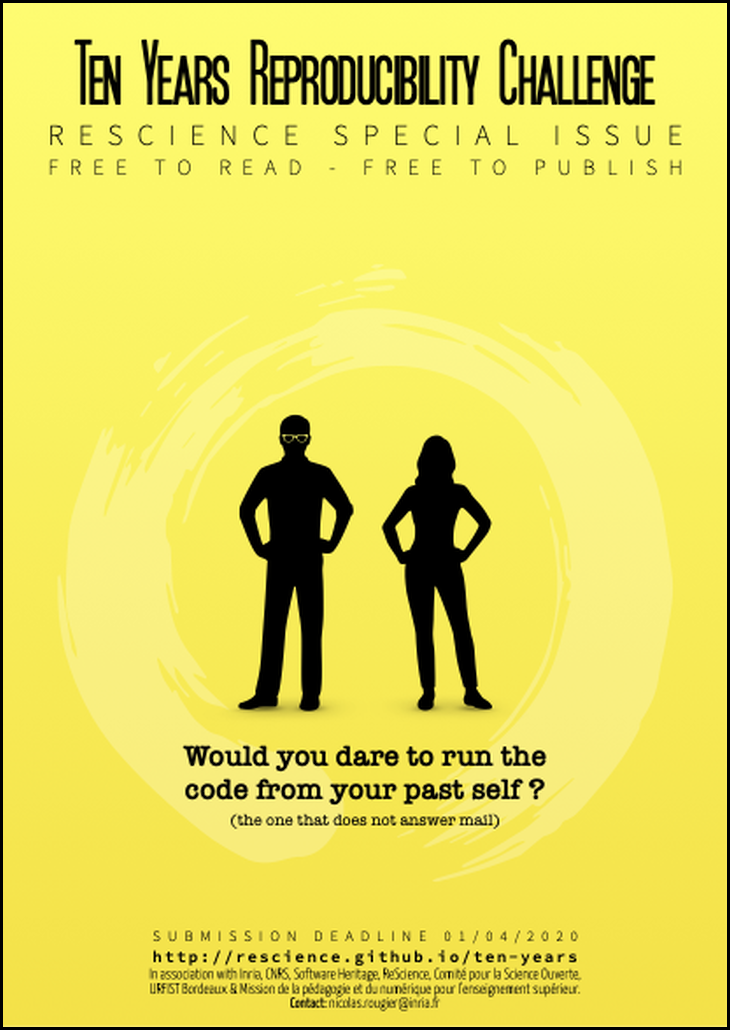
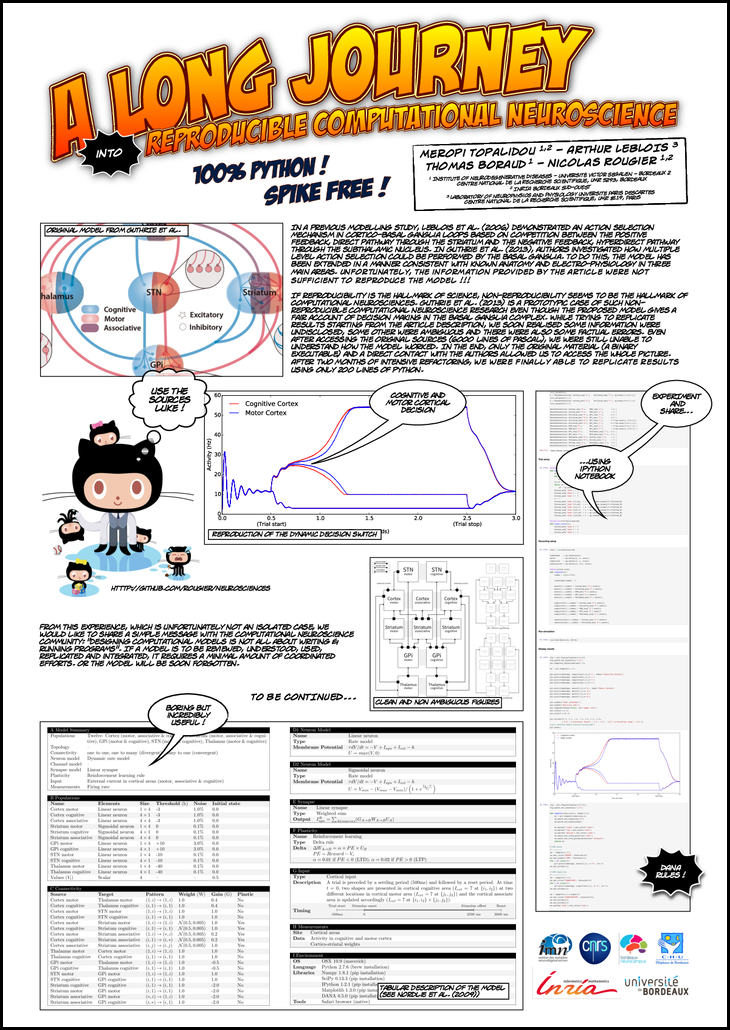
The French Reproducible Research Network is a national initiative bringing together scientists engaged in the study of factors promoting reproducibility in research. Although the challenges of reproducibility vary across disciplines, they concern all scientific fields. The network therefore strives to represent a rich and balanced disciplinary diversity. The network has approximately 350 members registered, holding a variety of positions and come from numerous institutions throughout France. At least 30 different disciplines are represented. This diversity is a fundamental element of the network, which aims to promote the exchange of best practices and stimulate discussion around common procedures in different disciplines.
I’ve co-funded the network in 2020 with Sarah Cohen-Boulakia, Frédéric Lemoire and Arnaud Legrand, following my interest in reproducibility for more than a decade. We organized the first conference in 2022 at Institut Pasteur and the network has grown to more than 400 members. We are about to join the global federation that we helped to shape.
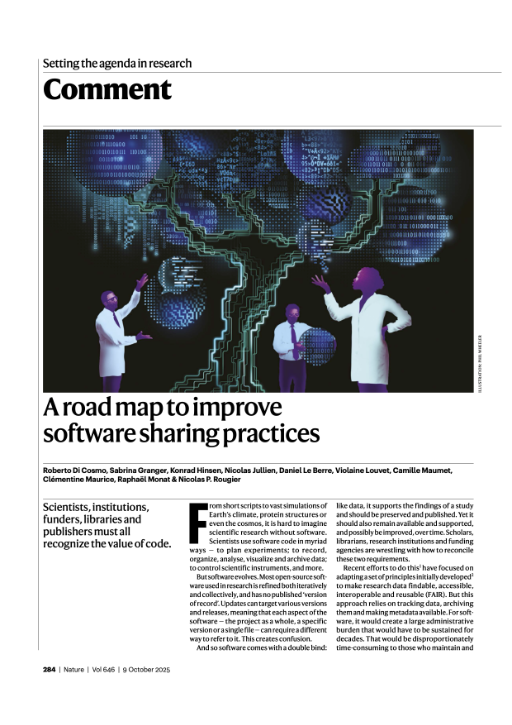
Hypermondes (2020…)
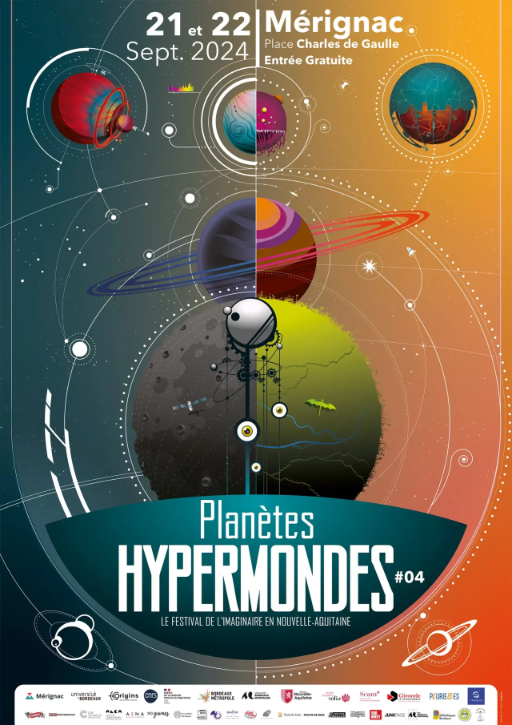
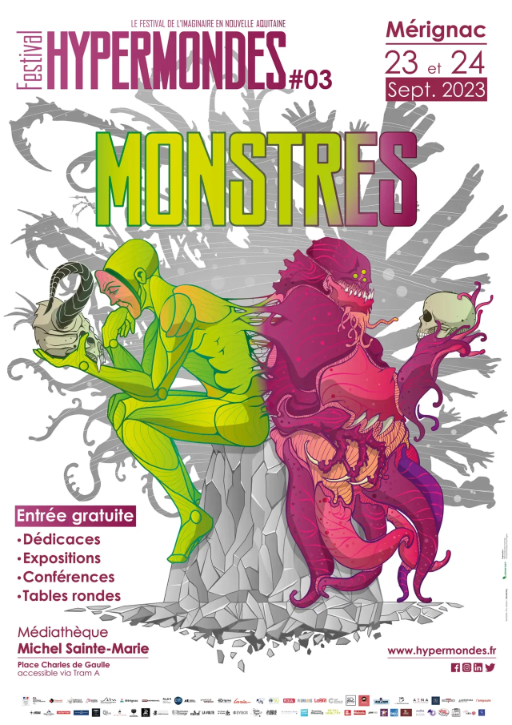
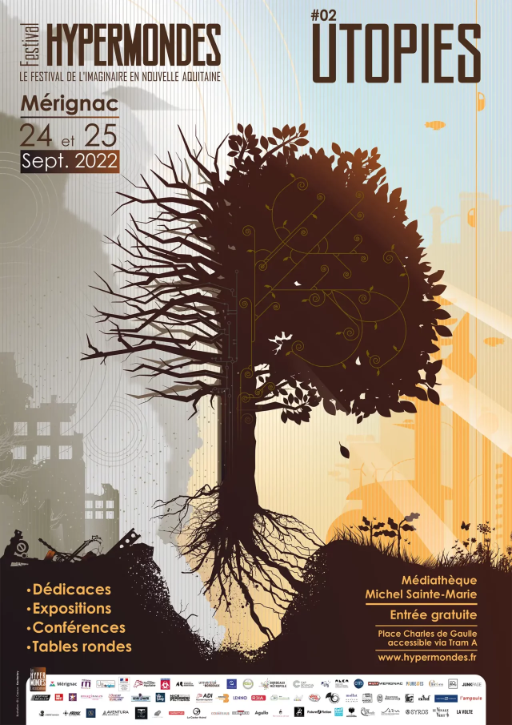
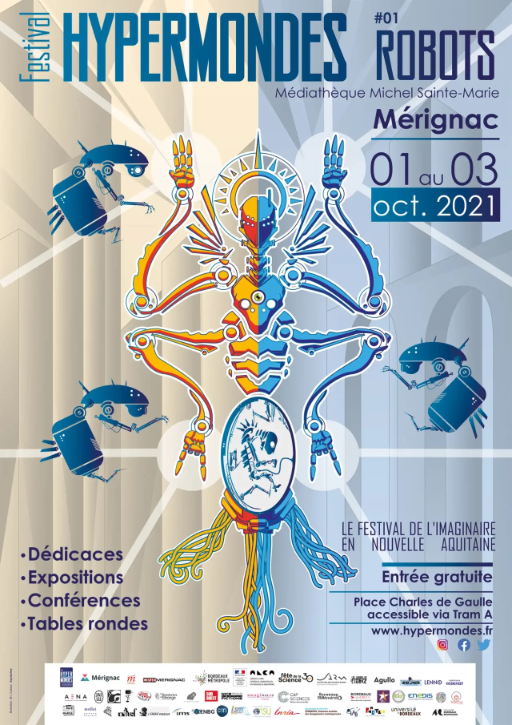
Hypermondes is an annual cultural event based in the Nouvelle-Aquitaine region of France, specifically dedicated to Science and Fiction (including science fiction, fantasy, and the fantastic). The festival was co-founded by Natacha Vas-Deyres, a teacher and researcher specializing in science fiction and speculative fiction, Fabrice Carré, computer scientist and president of SO Games, astrophysicist Franck Selsis, publisher André-François Ruaud, and a collective of authors, booksellers, communication professionals, and researchers.
The festival is held every third week of September in the city of Mérignac. What distinguishes Hypermondes from traditional literary fairs is its commitment to an interdisciplinary approach. The festival serves as a bridge between creative arts and rigorous scientific inquiry, inviting a diverse range of participants that includes authors, illustrators, filmmakers, and research scientists. By fostering a dialogue between sciences and speculative fiction, the event seeks to explore how imagined futures can be grounded in contemporary scientific reality.
I’ve been serving as vice-president of the association since 2021 and help organizing the festival as well as the life of the association.

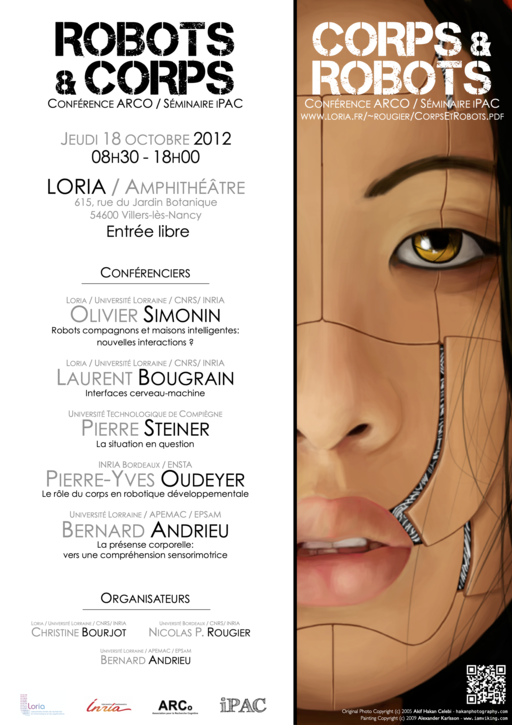
Psyphine (2010…)
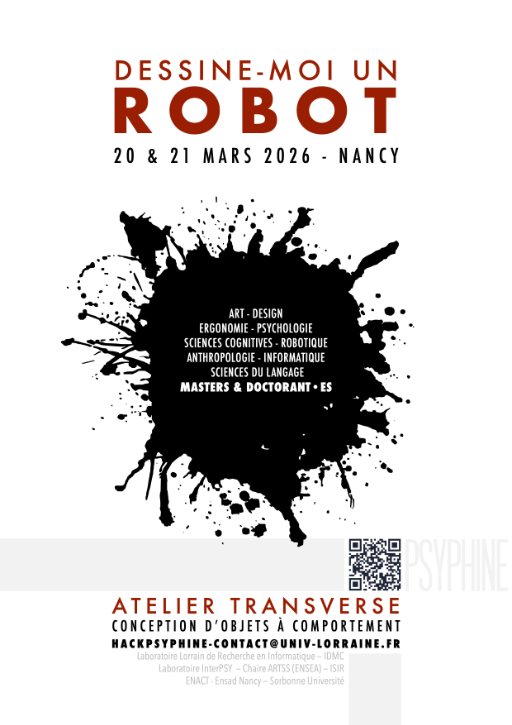
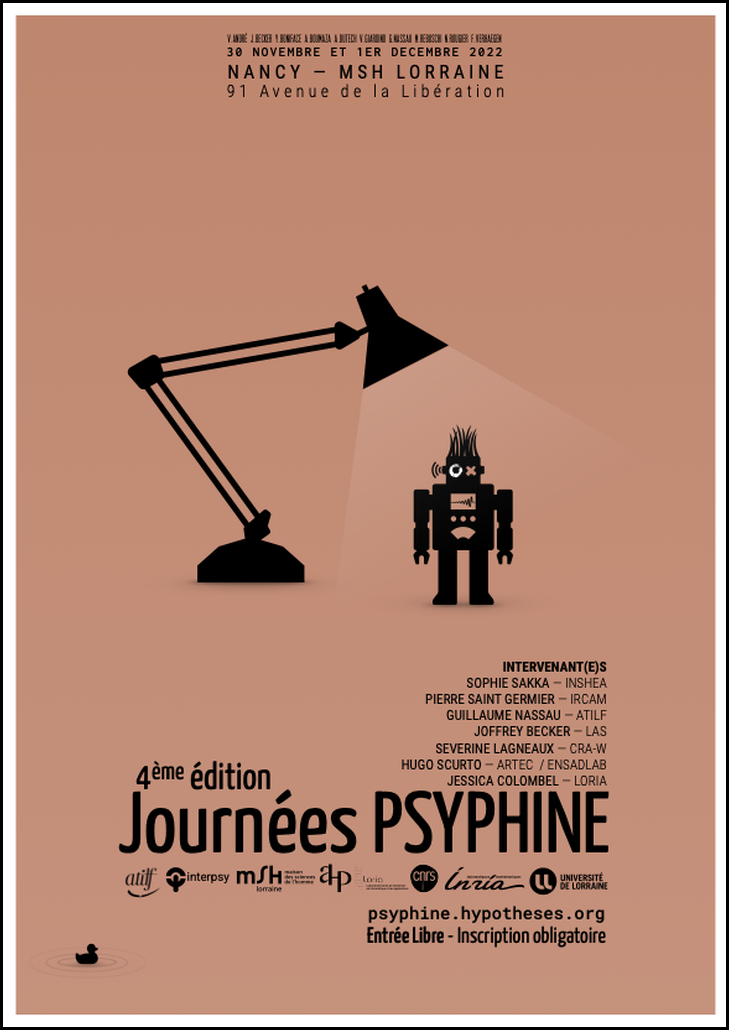
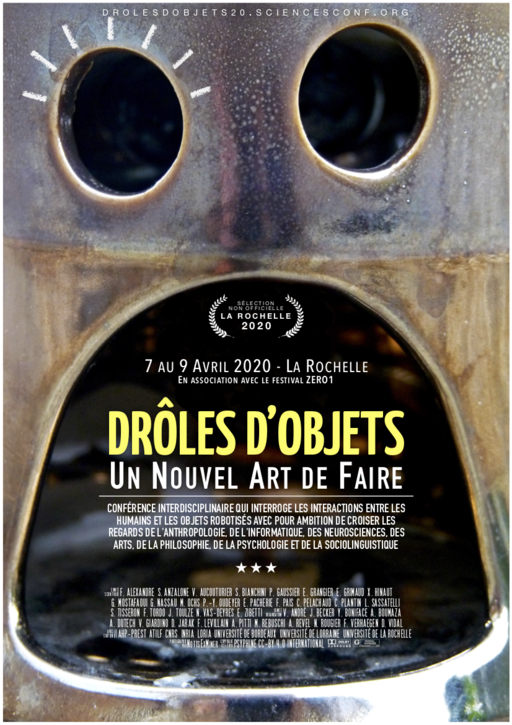
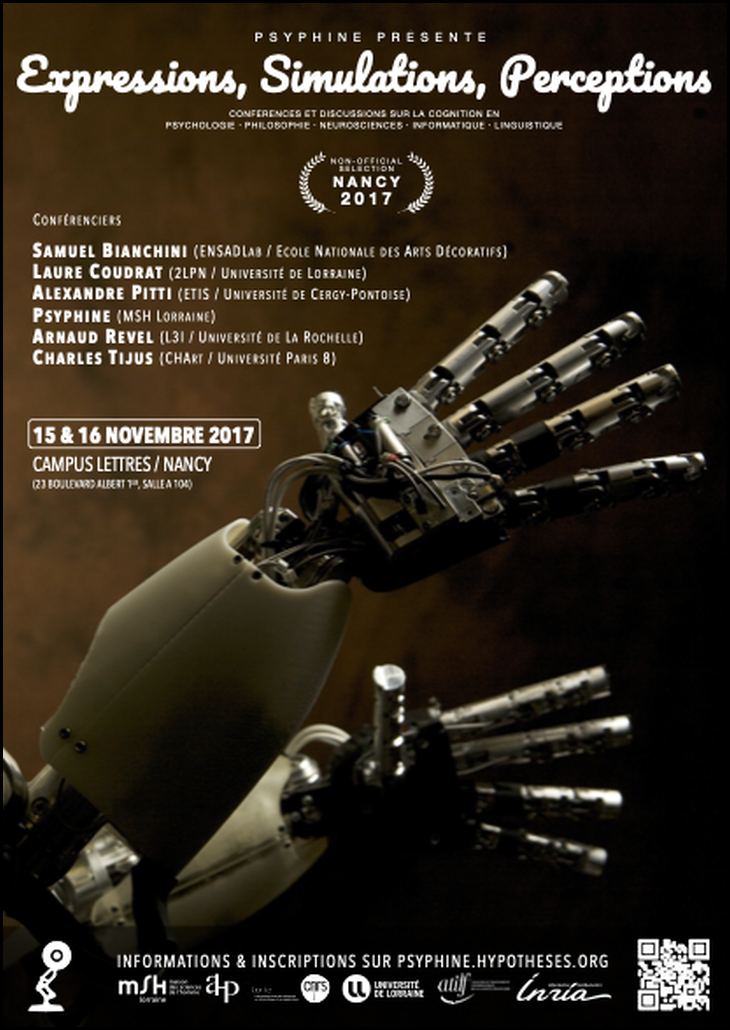
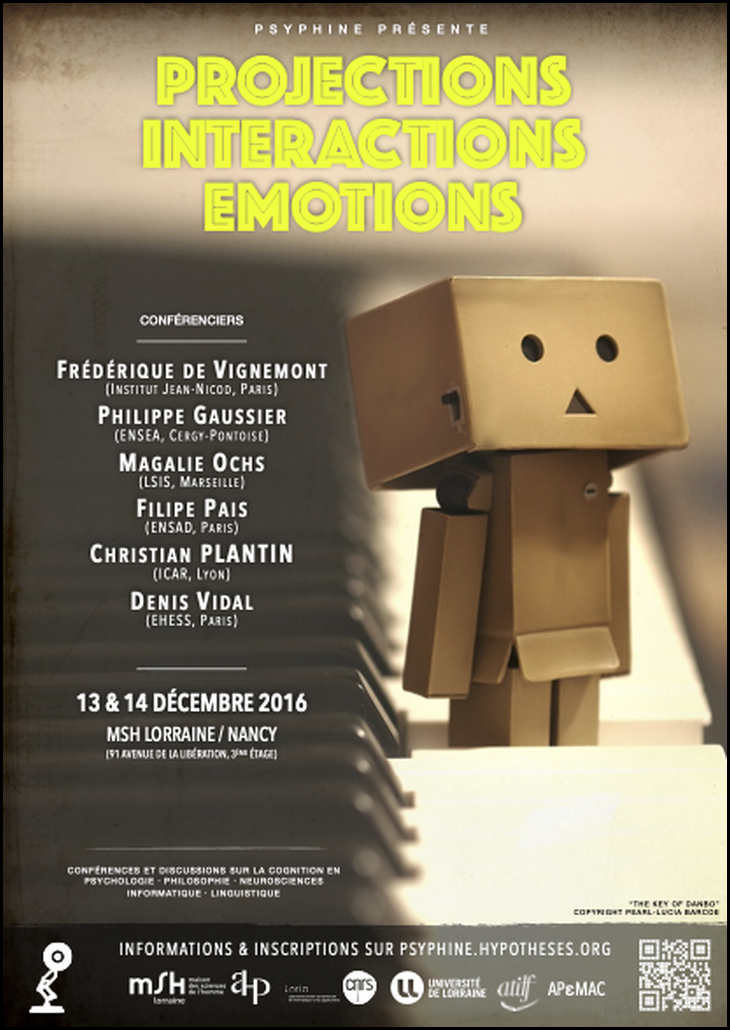
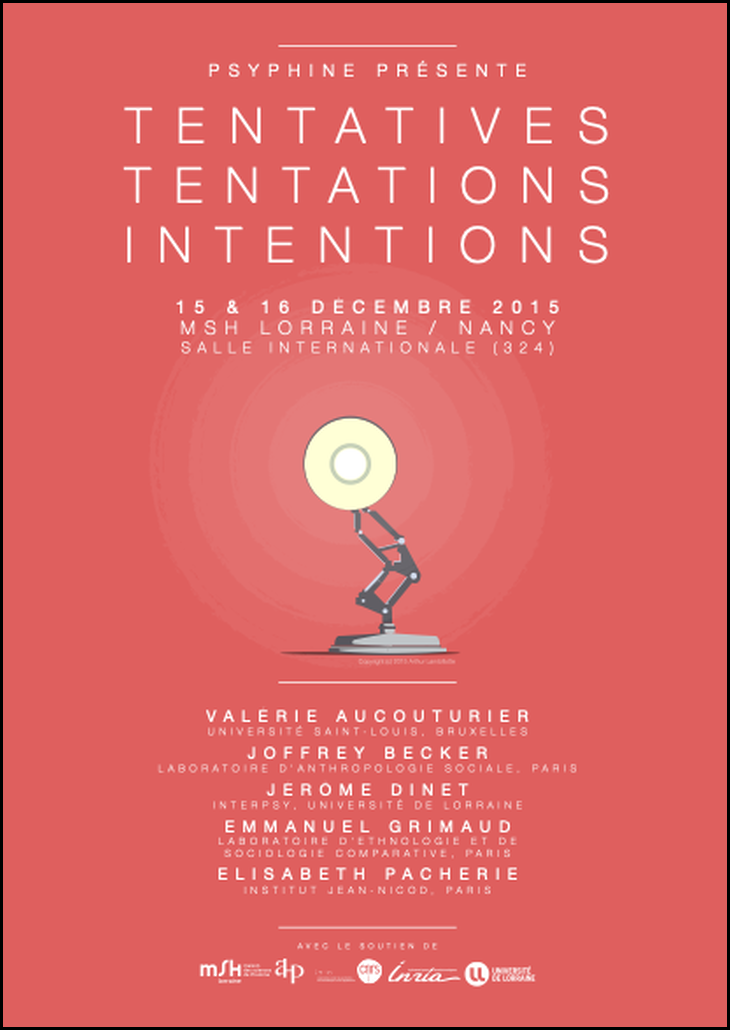
Psyphine is a multidisciplinary lab (computer science, philosophy, psychology, neuroscience, linguistic, ethnology) funded in 2010 that studies cognition from a theoretical and experimental perspective, centered around our relationship with manufactured objects. This relationship has been disrupted in recent years by the emergence of objects in our homes that are capable of acting and perceiving, such as autonomous vacuum cleaners, artificial companions and artificial assistants. While these objects offer varying degrees of complexity, their main characteristic is their ability to interact with the environment and people. However, understanding and analyzing these interactions requires the interweaving of numerous hypotheses, conditions, and parameters that are ultimately very difficult to assess within a single scientific discipline. Anthropology, philosophy, psychology, neuroscience, robotics, computer science, sociolinguistics, art, design: all these disciplines, whether scientific or not, have something to contribute to the subject and to teach other disciplines.
To study these issues, the Psyphine group brings together researchers from various disciplines (anthropology, computer science, neuroscience, philosophy, psychology, sociolinguistics) from different laboratories at the University of Lorraine (ATILF, Interpsy, LORIA, AHP-Prest), the Institute of Neurodegenerative Diseases in Bordeaux, the Jean Nicod Institute in Paris, and the EHESS Social Anthropology Laboratory. In the meantime, we’re also trying to gather a community around these questions and so far, we’ve organised 3 conferences, 6 workshops, one Summer school and one hackathon.